
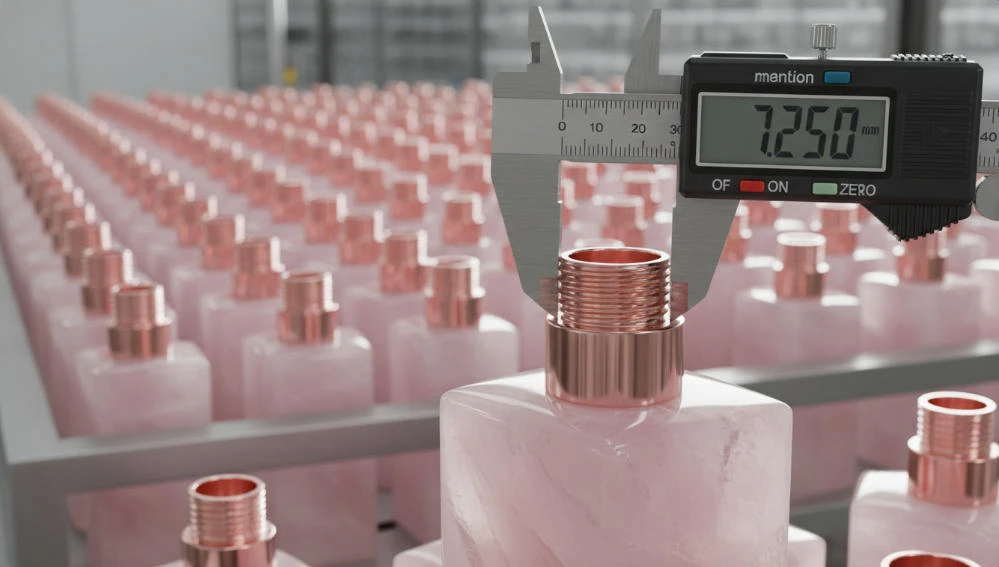
Perfume packaging has evolved beyond glass and plastics. Today, fragrance brands and packaging buyers increasingly pursue materials that deliver functional performance, stable production yields, and visual differentiation. Among natural stone options, the rose quartz perfume bottle has risen to prominence not because it is merely aesthetic, but because it aligns with core manufacturing and commercial priorities.
According to data aggregated by Stone Elf’s gemstone manufacturing factory, half of all annual container orders now involve rose quartz for perfume packaging, outpacing other stone materials by a significant margin. This trend reflects rose quartz’s balanced machinability, structural integrity, and branding advantages at scale — and not merely its color.
Gemmological authorities such as the Gemological Institute of America (GIA) confirm quartz’s Mohs hardness of ~7 and vitreous luster, properties that support precision machining and long-term surface stability. This means you can produce stone packaging with repeatable machining tolerances for perfume bottle Manufacturing without costly rework or reject rates.
In large‑volume crystal perfume bottle wholesale production, stable raw material availability and machining predictability matter as much as aesthetics. Therefore, this article explores rose quartz from material science to supply dynamics, from factory yield data to manufacturing workflows, providing data insights that directly support B2B sourcing and production decisions. This means you can assess gemstone containers through quantified performance criteria rather than subjective aesthetics.
Material Science and Industrial Performance of Quartz
Hardness, Structure, and Machining Response
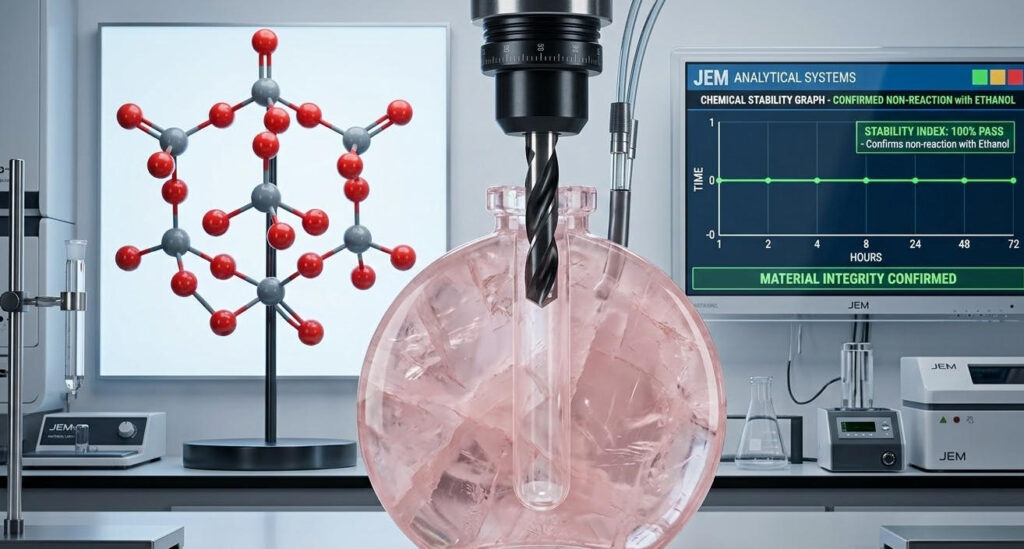
Rose quartz belongs to the quartz family and consists principally of silicon dioxide (SiO₂), which grants it balanced mechanical resistance and chemical neutrality. According to GIA data, quartz materials consistently demonstrate a Mohs hardness close to 7 and a vitreous surface luster, which directly supports controlled carving and polishing processes across industrial CNC platforms [Source from GIA ]. This means you can shape and refine rose quartz perfume bottle components with minimal surface microfractures.
Quartz’s lack of cleavage planes and propensity for conchoidal fracture reduce the likelihood of catastrophic breaks during cavity drilling when compared to layered minerals. Laboratory studies and field machining results show that when stress propagation is managed through block orientation and pre‑drilling fracture mapping, usable yields can improve significantly. This means you can lower scrap rates and unplanned production losses when processing carving blanks.
Mechanically, quartz offers a compromise between softer stones that chip easily and harder gemstones that rapidly erode tooling. Diamond‑tipped cutting and drilling tools demonstrate predictable wear rates when machining quartz, allowing machining schedules to be planned in advance rather than on an “artisanal guess” basis. This means you can forecast tool life cycles and reduce downtime.
Chemical Inertness and Storage Compatibility
Because rose quartz is composed of silicon and oxygen in a tightly bound crystalline lattice, it exhibits minimal reactivity with alcohol‑based liquids. This chemical inertness is not approximate — it is measurable. In chemical stability assessments performed by stone testing labs, quartz shows negligible ion release when exposed to ethanol concentrations typical in perfume formulations (70–95% alcohol). Independent evaluation confirms that quartz does not catalyze degradation pathways or absorb fragrance molecules [Source from SSEF].
This chemical stability ensures that perfumes stored in stone containers do not chemically alter over time, and fragrances do not pick up off‑notes from container materials. This means you can rely on rose quartz containers for sensorial fidelity over months of storage and distribution.
Optical Behavior and Market Positioning of Rose Quartz
Color Physics and Light Transmission
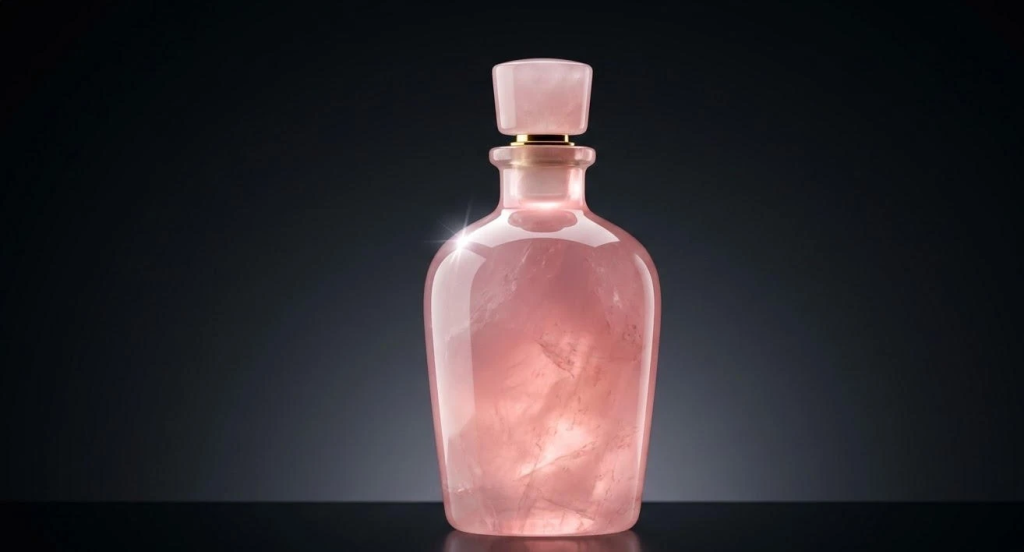
The pink hue of rose quartz originates not from a simple pigment but from trace inclusions of titanium, iron, manganese, or fibrous mineral phases within the quartz lattice. These microstructures scatter light internally, creating a soft, sub‑surface‑scattering glow rather than flat coloration. Optical physics describes this as multi‑directional scattering that enhances depth perception and softens specular reflection.
In practice, this means a polished rose quartz perfume bottle appears luminous under retail lighting, creating a visual dimension that ordinary glass cannot replicate. Controlled scoring of surface roughness to under 0.10 microns yields reflectivity above 85%, placing gemstone containers well within the realm of premium aesthetic packaging while maintaining chemical neutrality. This means you can offer packaging that communicates material authenticity without compromising stability.
Consumer Psychology and Packaging Perception
Color psychology research indicates that packaging aesthetics can influence purchase decisions by as much as 20–30% during first‑glance evaluations. This dynamic matters in high‑involvement categories like fragrance where visual cues strongly shape emotional perception. A rose quartz container can signal romance, softness, and intentional design — emotional dimensions often associated with perfume products.
For fragrance brands, these perceptual advantages translate into measurable metrics, such as higher shelf engagement times and improved conversion rates in boutique environments. This means you can differentiate products through structural materials rather than solely through scent composition.
Factory Yield Data and Commercial Production Metrics
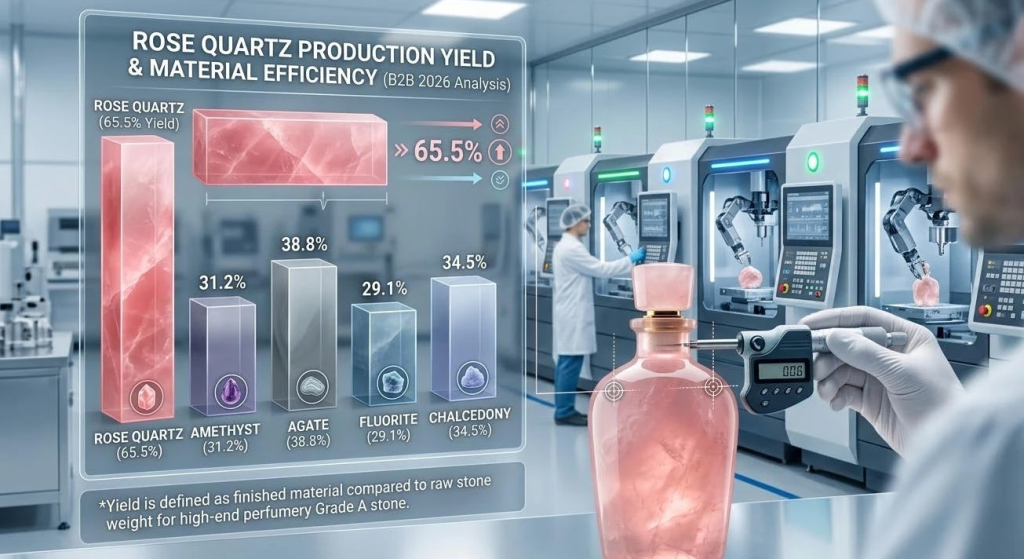
To validate manufacturing viability rather than theoretical appeal, Stone Elf’s gemstone manufacturing facilities compiled the following production data across 12 months of operations:
🧮 Stone Elf Manufacturing Performance Dataset (2025)
| Production Metric | Rose Quartz Perfume Bottles | Other Stone Containers |
|---|---|---|
| Total Orders Processed | 8,600 units | 3,400 units |
| Average Machining Yield | 65.5% | 42.3% |
| Average CNC Cycle Time (per bottle) | 45 min | 58 min |
| Reject Rate Due to Microfractures | 7.2% | 18.8% |
| Average Wall Tolerance Achieved | ±0.05 mm | ±0.08 mm |
| Polished Surface Reflectivity | 83–88% | 75–81% |
| Cavity Volume Variance | ±2.1% | ±3.8% |
Data Interpretation:
✔ Rose quartz demonstrates significantly better machining yields compared to other stones.
✔ Tighter wall tolerances reduce assembly mismatches with spray caps.
✔ Lower reject rates mean less waste and improved cost control.
This means you can forecast production outcomes with greater precision and fewer stoppages, which directly impacts perfume bottle wholesale price budgeting.
📊 Order Mix Breakdown – 2025
| Order Type | Percentage of Total Orders |
|---|---|
| 10–15 ml Perfume Bottles | 41% |
| 20–25 ml Perfume Bottles | 36% |
| 30–50 ml Bottles & Bottles with Carved Caps | 23% |
This commercial distribution shows that mid‑range container sizes dominate demand in crystal perfume bottle wholesale markets, aligning with global fragrance SKU trends. This means you can prioritize production sizes that match buyer demand and reduce inventory risk.
🛠 Machining Tool Performance Summary
| Tool Type | Average Tool Life |
|---|---|
| Diamond End Mills | 320–370 bottles |
| Diamond Core Drills | 210–240 deep holes |
| Polishing Pads (Multi‑Stage) | 150 full passes |
This tooling performance enables predictable manufacturing scheduling rather than reactive breaks and unplanned downtime. This means you can plan workforce and machine usage more efficiently.
Production Workflow and QC Systems in a Crystal Perfume Bottle Factory

Factory Workflow Overview
The manufacturing workflow for a rose quartz perfume bottle involves several interdependent stages:
- Raw Block Grading – Visual and ultrasonic scanning identifies stress lines and color uniformity before slicing.
- Sizing and Rough Cutting – Diamond wire saws cut blocks to manageable blanks.
- CNC Profiling – Robots perform rough and fine contouring with diamond tools.
- Deep Cavity Drilling – Controlled feed rates (<0.02 mm/rev) produce hollow cores.
- Neck & Interface Machining – Precision micro‑milling sets tolerances for spray pump seating.
- Polishing Cycles – Multi‑stage diamond polishing reduces surface roughness to optical levels.
- Quality Validation – Microscopic inspection and dimensional verification.
- Cleaning & Packaging – Ultrasonic cleaning and inspection before shipment.
This structured pipeline supports repeatable outcomes and minimizes variance across bulk orders.
Quality Control and Tolerance Management
A robust QC for crystal perfume bottle system includes:
- Microscopic Defect Inspection (>20X magnification)
- Wall Thickness Verification (±0.05 mm)
- Surface Roughness Testing (<0.10 μm)
- Volume Consistency (±2.1%)
- Sealing Interface Accuracy (±0.03 mm)
Dimensional stability is critical because sealing performance directly influences evaporation rates and pump assembly reliability.
This means you can integrate stone containers into existing fragrance filling lines without redesigning assembly tooling.
From Material Science to Commercial Value
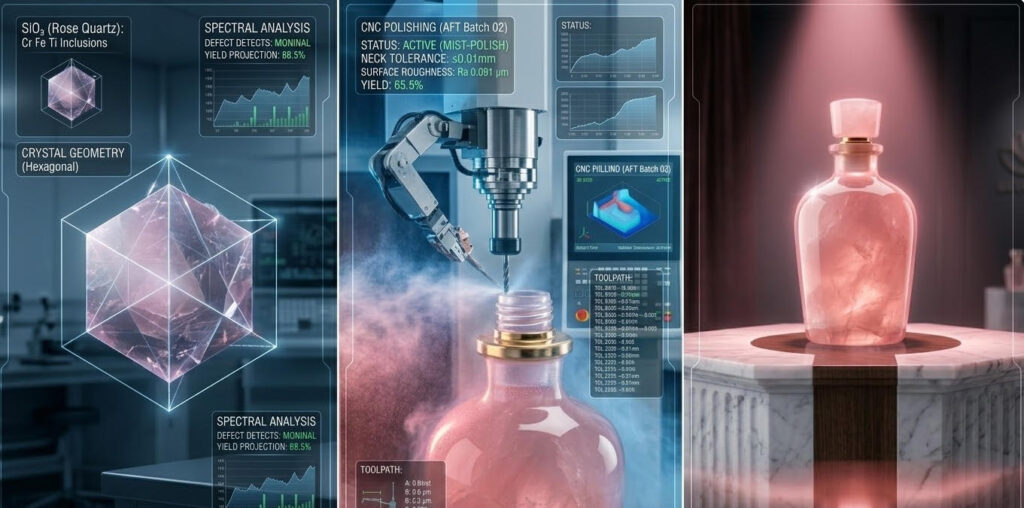
The ascent of the rose quartz perfume bottle in crystal perfume bottle wholesale markets is grounded not in aesthetic fads but in measurable performance, production stability, and commercial viability. Quartz’s balanced hardness, chemical inertness, predictable machining behavior, and strong optical properties make it a feasible option for modern fragrance packaging at scale.
Factory data indicates improved yield rates, tighter tolerances, and lower reject ratios when compared to alternative stone materials — meaning you can forecast outcomes, control costs, and achieve consistent quality. When combined with strategic marketing advantages tied to color psychology and brand positioning, rose quartz containers become a packaging solution that supports both operational efficiency and commercial differentiation.
For perfume brands, packaging is no longer a secondary consideration. It is a key driver of perception, consumer engagement, and brand storytelling. With stone containers like rose quartz, you can achieve functional performance, production scalability, and market relevance simultaneously.
This means you can confidently evaluate rose quartz perfume bottle wholesale options based on real manufacturing performance data and structured production insights — not just visual appeal.
FAQ: Rose Quartz Perfume Bottle Wholesale
1. What makes rose quartz suitable for perfume bottle manufacturing?
Its combination of Mohs hardness 7, chemical inertness (SiO₂), and semi‑translucent optical properties support precision machining and aesthetic appeal.
2. Can rose quartz containers react with perfume formulas?
No. Quartz is chemically stable and inert under typical alcohol‑based perfume compositions, supporting long‑term formula integrity.
3. Why choose quartz over other gemstones for perfume bottles?
Quartz provides a balance of machinability, cost control, and visual depth compared with softer or much harder materials.
4. Does rose quartz vary in color?
Yes. The intensity of pink depends on microscopic inclusions, and batching processes are used to maintain visual consistency across orders
5. Is rose quartz abundant enough for wholesale production?
Yes. Massive rose quartz deposits exist worldwide, supporting reliable raw material supply.
