
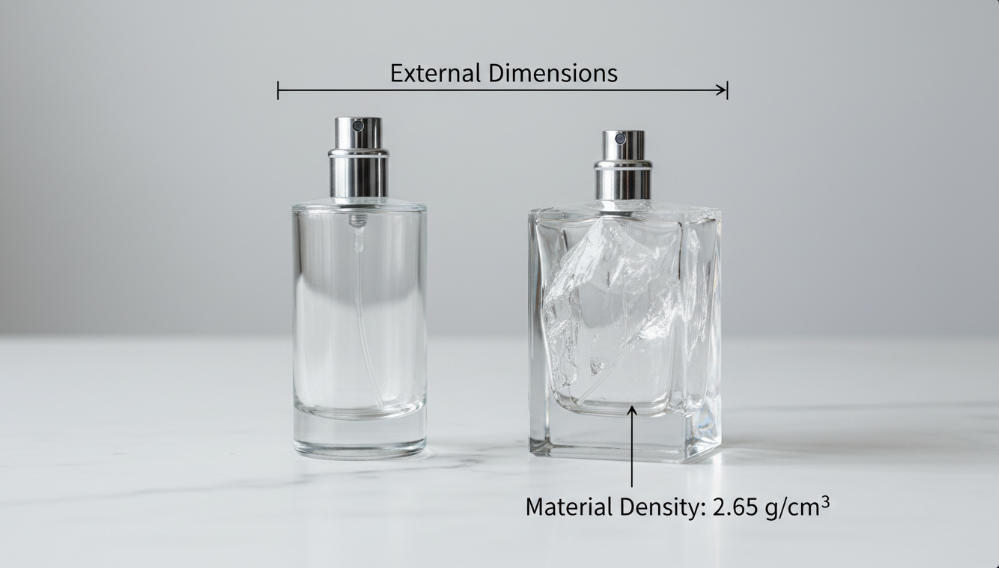
A 3.4 oz perfume bottle holds approximately 100 milliliters of liquid, which is one of the most commonly used fragrance sizes worldwide. Although both glass and crystal bottles can hold this same volume, their external dimensions, weight, and structural characteristics differ significantly due to the materials and manufacturing processes involved.
According to material properties published by the Gemological Institute of America (GIA), quartz crystal—the primary material used in natural crystal perfume bottles—has a density of 2.65 g/cm³, slightly higher than average glass (~2.4–2.5 g/cm³). Quartz also exhibits brittle fracture behavior, meaning stress can propagate through thin sections if structural margins aren’t maintained.
This means you can expect a crystal 3.4 oz perfume bottle to weigh substantially more and often appear larger than a glass bottle of the same liquid capacity.
Understanding how big a 3.4 oz bottle of perfume truly is requires separating internal volume (100 ml) from external dimensions and material characteristics—a distinction that significantly impacts manufacturing design, packaging, shipping, and retail display.
- Understanding the True Volume of a 3.4 oz Perfume Bottle
- Global Perfume Bottle Size Standards
- Material Matters: Crystal vs. Glass Perfume Bottles
- Why Luxury Brands Choose Crystal Perfume Bottles
- Crystal Perfume Bottle Manufacturing: Engineering Behind a 3.4 oz Bottle
- Factory Production Data: Structural Parameters and Yield
- Exact Dimensions of a 3.4 oz Perfume Bottle
- Engineering Design of a 3.4 oz Perfume Bottle
- Packaging Engineering and Shipping Safety
- Key Considerations When Choosing a 3.4 oz Perfume Bottle
- About Stone Elf
- Technical References (Authoritative, Clickable)
Understanding the True Volume of a 3.4 oz Perfume Bottle
Capacity vs. Physical Dimensions
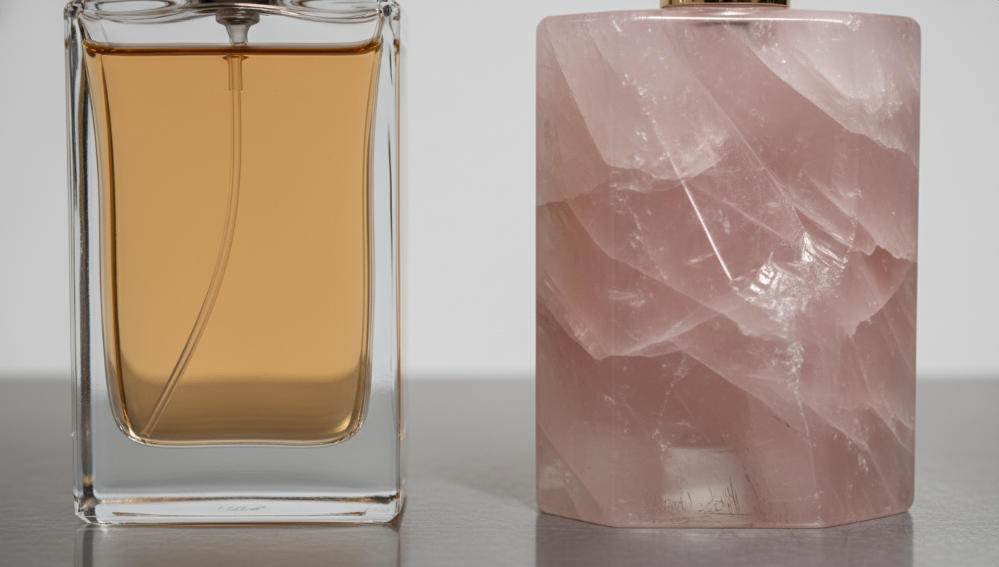
A 3.4 oz perfume bottle specifically refers to the internal liquid volume—about 100 milliliters. However, the external dimensions of the bottle can vary depending on the material (glass vs. crystal), wall thickness, bottle shape, base design, and manufacturing process.
According to the International Fragrance Association (IFRA), many fragrance brands standardize bottle sizes at 30 ml, 50 ml, and 100 ml to streamline packaging design, production molds, and global retail requirements.
Glass perfume bottles produced through industrial blow-molding or press-and-blow processes maintain thin, uniform walls. The Glass Packaging Institute explains that modern press-and-blow glass forming technology allows wall thicknesses as thin as 1.8–2.5 mm while maintaining structural integrity at high production volumes.
Crystal perfume bottles cannot be formed in the same way; they must be machined from solid stone blocks, which requires thicker walls and additional reinforcement to avoid fractures.
Global Perfume Bottle Size Standards
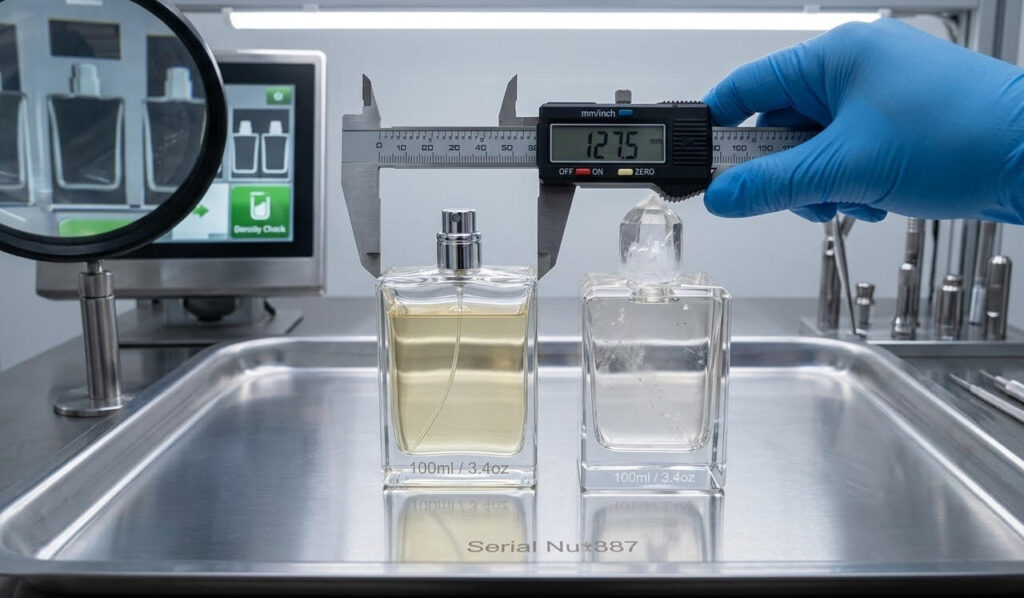
The 100 ml (3.4 oz) bottle has become the most widely recognized fragrance packaging format globally, occupying a balance between retail display needs, consumer usage patterns, and regulatory compatibility.
Industry-recognized bottle sizes include:
| Bottle Size | Approx. Volume | Typical Use |
|---|---|---|
| 1 oz | ~30 ml | Travel size |
| 1.7 oz | ~50 ml | Mid-size |
| 3.4 oz | ~100 ml | Full-size |
International liquid regulations further reinforce this standard. According to the Transportation Security Administration (TSA), liquids carried in hand luggage must be in containers of 100 ml or less, which has encouraged fragrance brands to adopt 3.4 oz packaging.
This means you can design products that comply with travel regulations while still offering full-size volume.
Material Matters: Crystal vs. Glass Perfume Bottles
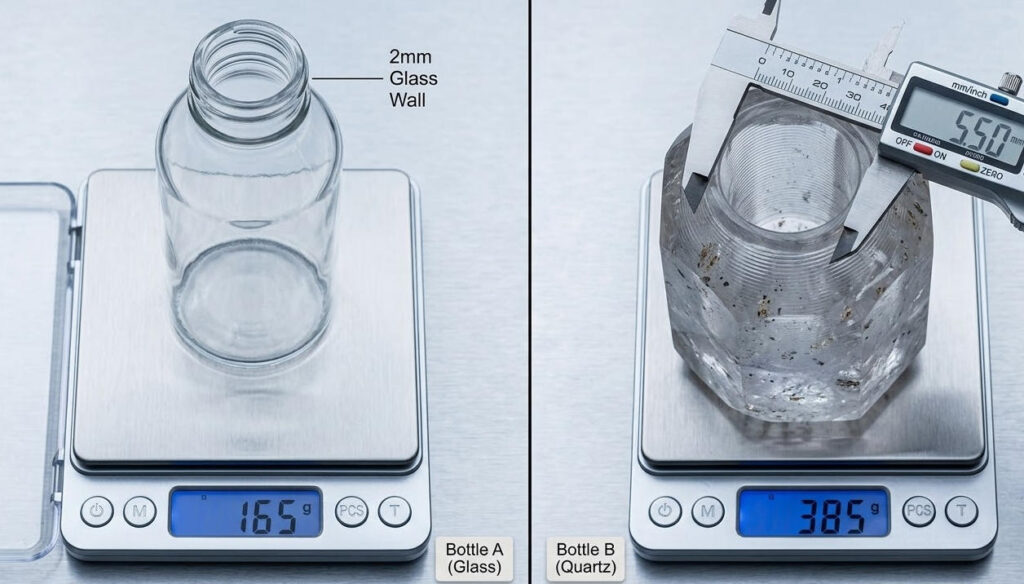
The key differences between crystal and glass perfume bottles come down to material properties, production process, and physical weight.
Glass bottles dominate mass-market fragrance packaging due to the efficiency of molding technology and ability to produce consistent sizes at scale.
According to the British Glass Manufacturers Confederation, glass bottle manufacturing lines can produce thousands of containers per hour with tight dimensional control.
Crystal bottles require far more delicate processing. Natural quartz crystals must be carved and drilled from solid mineral blocks; they cannot be melted and molded like glass. The higher density and brittle nature of crystal require thicker walls to prevent fracture.
A typical comparison shows:
| Material | Wall Thickness | Empty Bottle Weight |
|---|---|---|
| Glass perfume bottle | ~1.8–2.5 mm | ~150–200 g |
| Crystal perfume bottle | ~4–6 mm | ~320–420 g |
Crystal bottles feel heavier and appear slightly larger even though they hold the same liquid volume.
Why Luxury Brands Choose Crystal Perfume Bottles
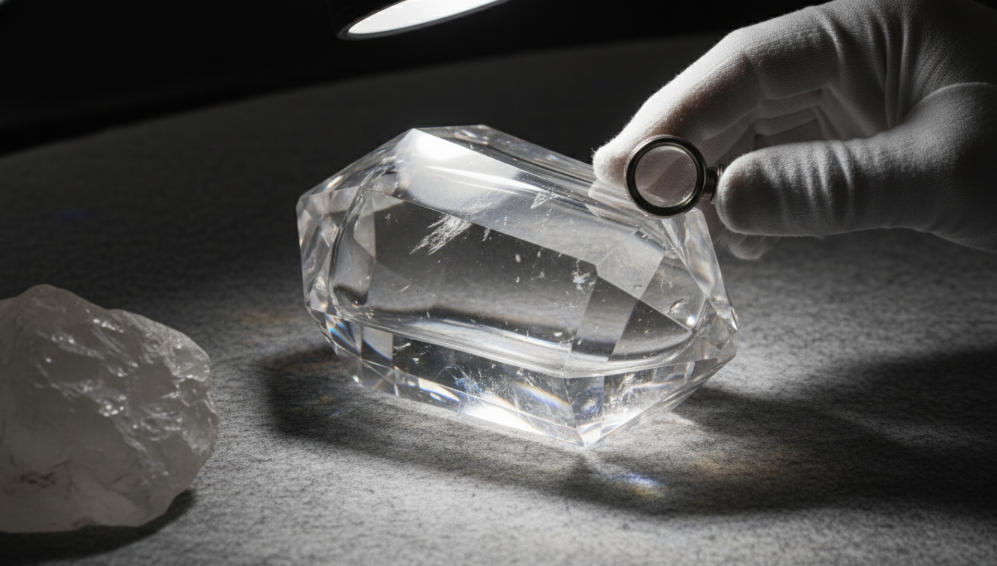
Luxury and niche fragrance brands increasingly adopt crystal bottles to differentiate their packaging and create collector’s appeal.
Crystal offers several advantages:
- Optical Clarity – Natural quartz can be polished to high transparency, creating striking light refraction.
- Tactile Weight – Higher density yields a substantial feel that consumers often associate with luxury.
- Craftsmanship Aesthetics – Carved or faceted crystal bottles convey artisanal quality rarely achievable with molded glass.
The Gemological Institute of America (GIA) highlights that quartz crystal’s optical properties make it ideal for decorative and display applications.
This means crystal bottles can enhance brand positioning beyond simple packaging—they become part of the product’s narrative and perceived value.
Crystal Perfume Bottle Manufacturing: Engineering Behind a 3.4 oz Bottle
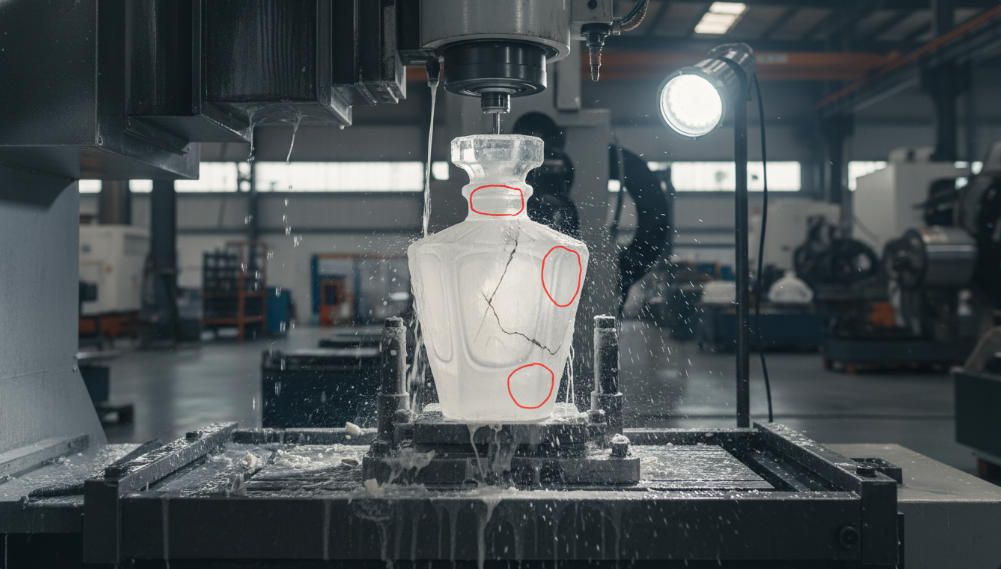
Natural crystal perfume bottles cannot be produced by molding. Instead, each bottle is machined from a solid mineral block using CNC jade carving, precision drilling, and expert polishing.
Raw Material Selection
Before production begins, raw crystal blocks are inspected for internal fractures, inclusions, and density anomalies. Early-stage material loss is common:
| Processing Stage | Avg. Material Loss |
|---|---|
| Block selection | 5–8% |
| Internal fracture inspection | 6–10% |
| CNC outer shaping | 4–6% |
| Internal cavity drilling | 3–5% |
| Total | ~15–20% |
Material loss is significantly higher than in glass packaging, where molten glass is nearly fully utilized due to the nature of molding processes.
This means you can expect higher raw material costs and careful quality sorting before machining begins.
Factory Production Data: Structural Parameters and Yield
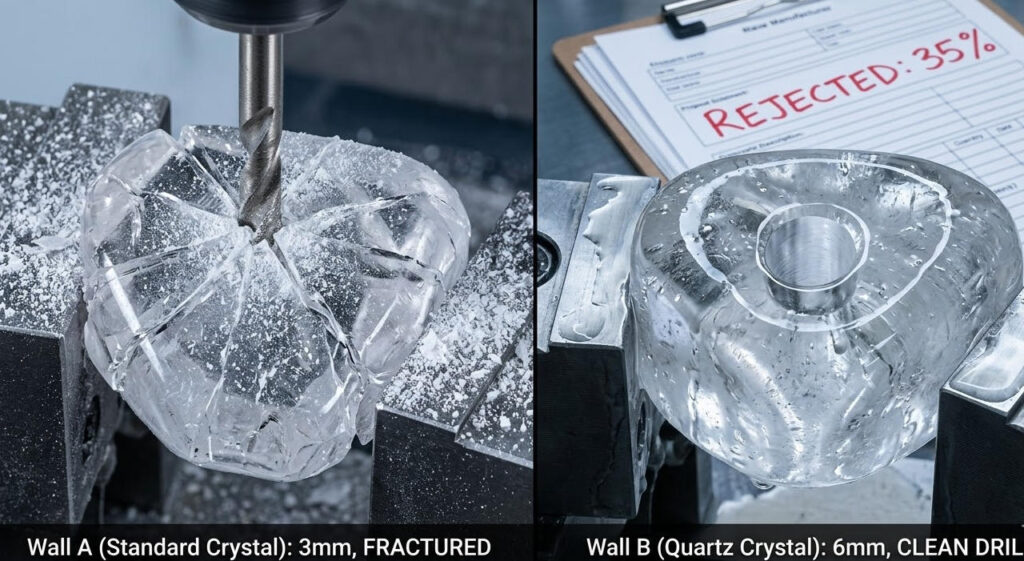
Design decisions such as wall thickness and reinforcement directly impact production yield. Factory data shows how different parameters influence success rates:
| Wall Thickness | Breakage Rate During Drilling |
|---|---|
| 3 mm | 28–35% |
| 4 mm | 12–18% |
| 5 mm | 6–9% |
| 6 mm | 3–5% |
Maintaining walls below 4 mm nearly triples the risk of fracture during machining.
This means thicker designs not only increase durability but also significantly improve manufacturing yield and cost efficiency.
Exact Dimensions of a 3.4 oz Perfume Bottle
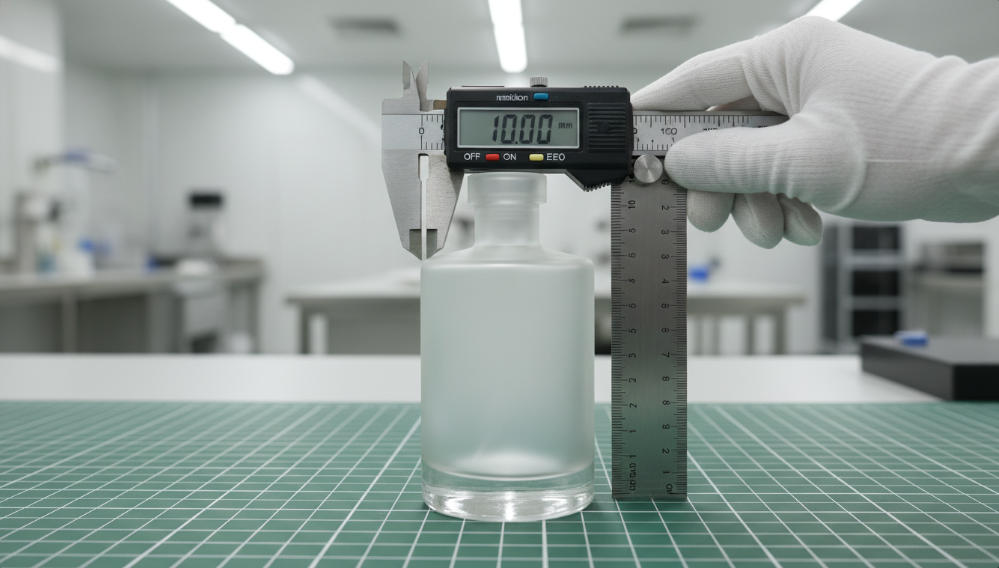
Although internal volume is fixed at 100 ml, external dimensions vary by design.
Common dimensional ranges:
| Parameter | Typical Range |
|---|---|
| Bottle height | 100–120 mm |
| Bottle width | 45–60 mm |
| Bottle depth | 30–50 mm |
| Neck diameter | 15–20 mm |
| Base thickness | 8–12 mm |
These dimensions balance structural stability with visual design.
Taller, narrower bottles may appear elegant but can be less stable on shelves, while wider designs increase base stability.
This means you can tailor bottle shape to brand aesthetics without sacrificing structural integrity.
Engineering Design of a 3.4 oz Perfume Bottle
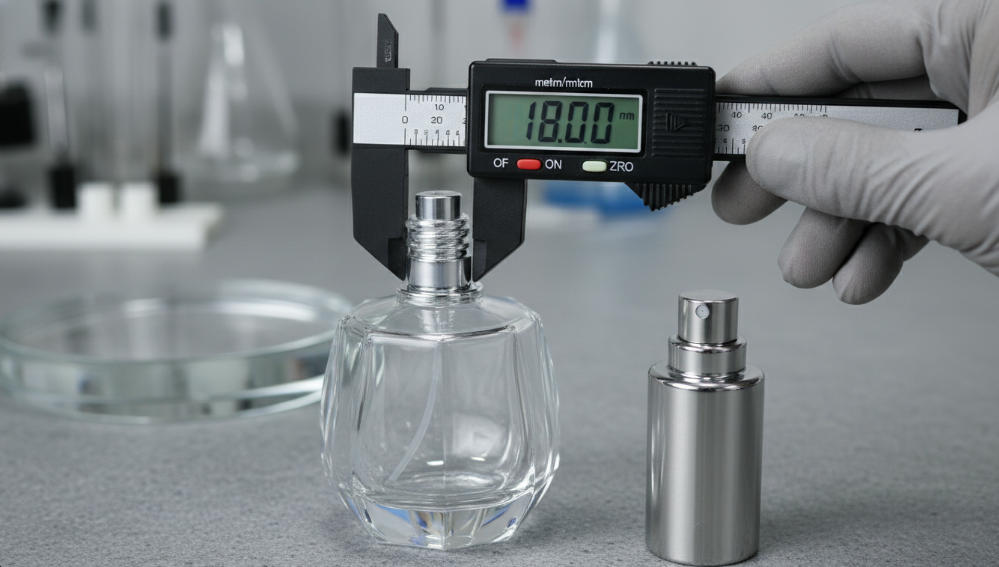
Designing a 3.4 oz perfume bottle requires balancing:
- structural stability
- aesthetic appeal
- compatibility with spray components
Crystal bottle walls are reinforced to withstand machining and usage. Base thickness is typically 8–12 mm to handle bottom impact loads.
The neck opening must be drilled with tight tolerances (±0.05 mm) to ensure compatibility with standard perfume spray pumps of 15 mm, 18 mm, or 20 mm diameter.
Poorly fitting necks can lead to vapor leaks and degraded fragrance performance.
This means engineering precision is crucial to ensure both product functionality and consumer satisfaction.
Packaging Engineering and Shipping Safety
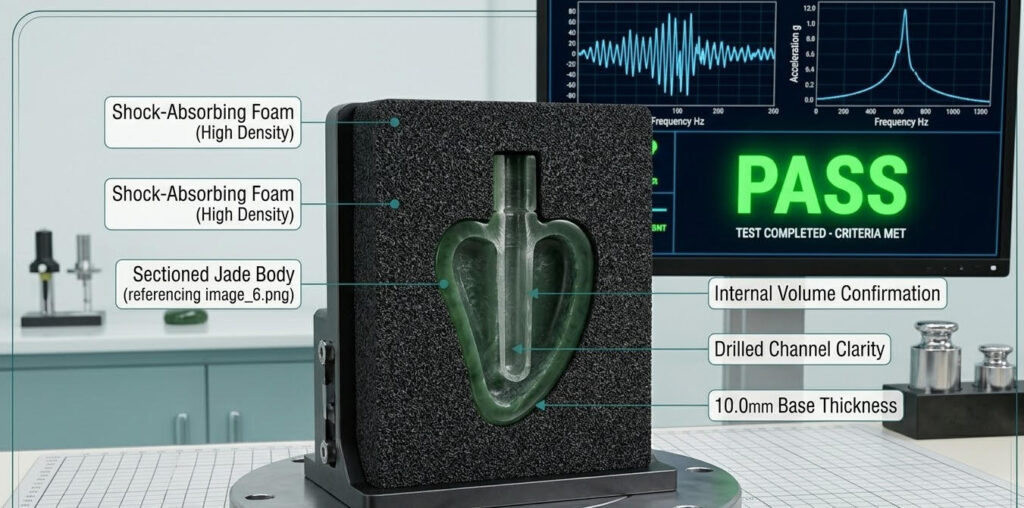
Crystal perfume bottles require packaging engineered to absorb shock and vibration during transport.
Durability test outcomes for various packaging types:
| Packaging Type | Breakage Rate (Simulated Transit) |
|---|---|
| Cardboard divider only | 8–12% |
| Molded pulp tray | 4–6% |
| High-density foam insert | <2% |
High-density foam inserts provide the best protection against drop and vibration stresses.
This means you can significantly reduce loss rates during shipping by investing in purpose-engineered packaging materials.
Key Considerations When Choosing a 3.4 oz Perfume Bottle
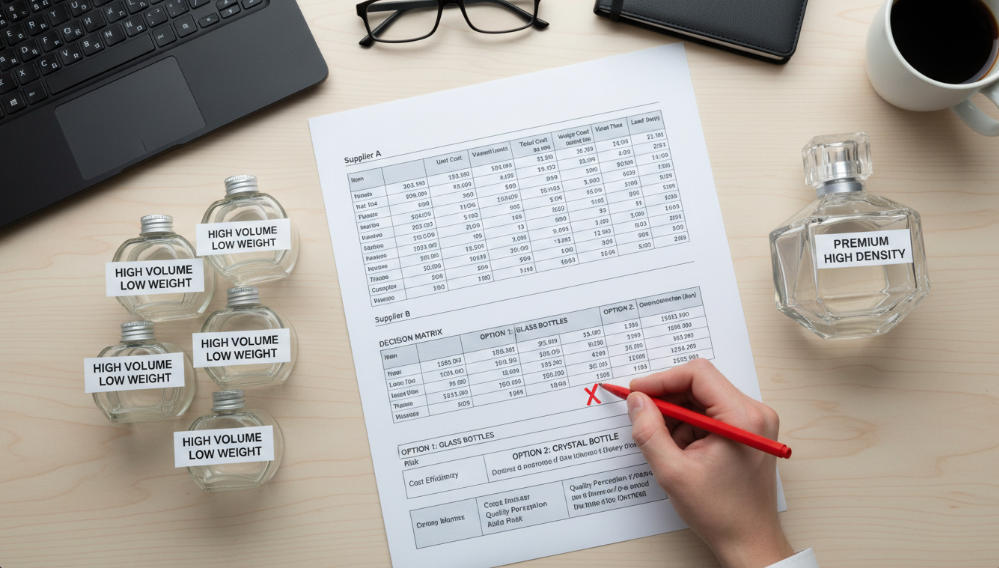
When selecting fragrance packaging, business buyers evaluate:
- Bottle material cost
- Production complexity
- Shipping weight and logistics
- Brand positioning and design
Glass bottles are cost-effective for high-volume production, while crystal bottles emphasize premium visual experience and collectible value.
Understanding these trade-offs helps you optimize packaging choices for brand strategy and operational efficiency.
About Stone Elf
Stone Elf produces natural crystal and jade perfume bottles using precision CNC carving, drilling, and polishing processes designed for brittle gemstone materials. Production engineers analyze wall thickness, yield rates, and machining tolerances to deliver structurally consistent bottles suitable for premium fragrance packaging.
For businesses seeking crystal perfume bottle wholesale or custom design, Stone Elf offers tailored solutions and batch-level quality reports to support sourcing decisions.
Technical References (Authoritative, Clickable)
- Gemological Institute of America (GIA) – Mineral properties & optical clarity
https://www.gia.edu - International Fragrance Association (IFRA) – Global fragrance standards
https://ifrafragrance.org - Glass Packaging Institute – Glass container manufacturing tech
https://www.gpi.org - Swiss Gemmological Institute SSEF – Gemstone testing & structural science
https://www.ssef.ch - Transportation Security Administration (TSA) Liquids Rule – Carry-on liquid limits
https://www.tsa.gov/travel/security-screening/liquids-rule
