
In the luxury fragrance industry, perfume bottle custom is far more than decorative design. From a manufacturer’s perspective at Stone Elf, customization is an engineering-driven process that connects brand identity, material science, production feasibility, and long-term supply chain stability. A crystal perfume bottle is not simply packaging; it is a structural and aesthetic component that represents the fragrance itself.
Over years of manufacturing crystal perfume bottles, stone caps, and natural material accessories, we have learned that successful OEM customization requires early collaboration between brand designers and factory engineers. Without technical planning, even visually impressive designs may fail during machining, polishing, or assembly. Therefore, professional manufacturers focus on measurable parameters, verified testing standards, and realistic material capabilities from the beginning.
Industry research from organizations such as the International Fragrance Association (IFRA) shows that consumers strongly associate luxury packaging materials with authenticity and perceived product value. As a result, fragrance brands increasingly seek OEM partners that offer engineering insight, quality testing, and manufacturing transparency rather than simple production services.
This article provides a complete manufacturer-level explanation of crystal perfume bottle custom OEM production. You will see real engineering parameters, testing protocols, manufacturing workflows, and sustainability practices based on practical factory experience. The goal is to help fragrance brands understand how crystal perfume bottles move from concept sketches to high-quality finished products ready for global distribution.
The Fundamentals of Perfume Bottle Custom in Crystal Manufacturing
What “Perfume Bottle Custom” Means in OEM Production
In real OEM manufacturing, perfume bottle custom refers to a structured engineering process rather than a purely artistic one. The customization journey includes concept analysis, CAD modeling, structural validation, prototyping, machining optimization, finishing development, and multi-stage testing. Each step ensures that design ideas can be reliably reproduced during mass production.
At Stone Elf, we begin by translating brand sketches into precise 3D models with measurable parameters. Structural details such as wall thickness, base stability, and neck tolerances are defined before any physical production begins. This approach prevents costly design revisions and ensures that bottles remain functional throughout their lifecycle.
Additionally, customization involves coordination with pump suppliers, cap manufacturers, and decoration partners. Neck standards such as FEA15 and FEA18 require strict dimensional consistency to maintain sealing performance. Even small deviations can lead to leakage risks or pump misalignment during final assembly.
Why Crystal Behaves Differently from Glass in Custom Projects
Crystal perfume bottles offer exceptional clarity and weight, but their physical properties require specialized machining techniques. Compared to soda-lime glass, crystal materials are denser and more sensitive to thermal stress. Improper cutting speed or cooling conditions may lead to internal micro-cracks that only become visible during final polishing.
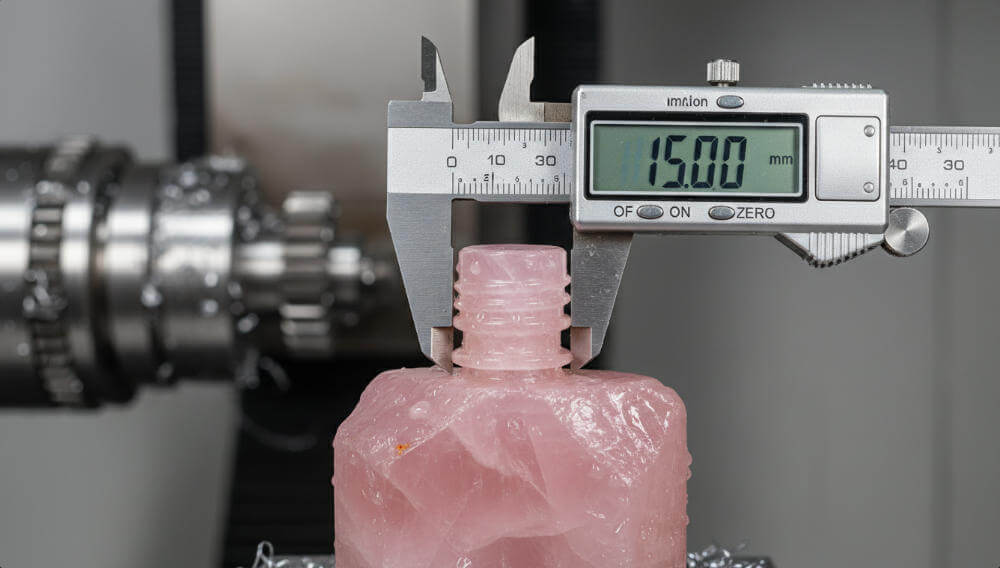
During production, we apply tolerance guidelines similar to ISO 2768-mK general mechanical tolerance principles. Typical OEM engineering ranges include:
- Neck outer diameter tolerance: ±0.05 mm
- Pump seating flatness deviation: ≤0.03 mm
- Thread depth variation: ±0.04 mm
Wall thickness also influences durability and machining stability. Based on factory production data:
- Recommended crystal wall thickness: 5–10 mm
- Heavy luxury base thickness: 12–20 mm
- Minimum internal corner radius: ≥1.5 mm
Maintaining these ranges significantly reduces polishing fractures and machining defects.
The Manufacturer’s Role Beyond Fabrication
Modern OEM manufacturers act as technical partners rather than simple producers. In early discussions, we evaluate design feasibility, material performance, and long-term durability considerations. Limited-edition artistic bottles may prioritize deep engraving and heavy bases, while high-volume fragrances require efficient machining cycles and scalable production methods.
Manufacturers also implement structured testing frameworks inspired by standards such as ISO quality management systems and ASTM material evaluation protocols. By combining design consultation with engineering verification, OEM partners help brands transform creative ideas into manufacturable and reliable luxury products.
Design Development – Turning Creative Concepts into Manufacturable Crystal Bottles
From Sketch to Engineering Blueprint
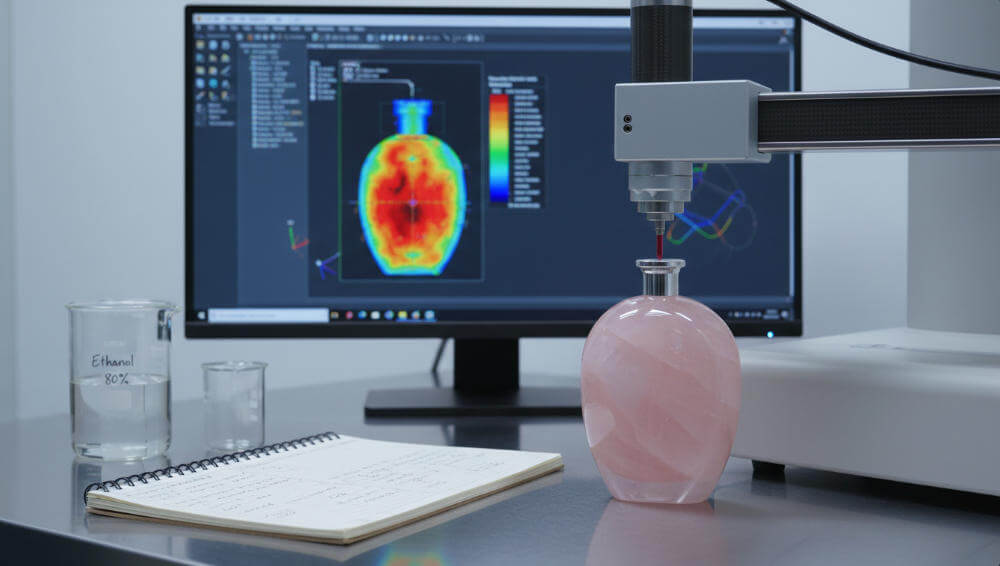
The design process begins when brand designers submit concept sketches or visual references. Our engineering team converts these concepts into precise CAD drawings that define curvature, structural reinforcement, and machining strategies. During modeling, we analyze stress concentration areas and adjust features to prevent cracking during polishing.
We also simulate assembly compatibility, ensuring that pumps and caps fit correctly within defined tolerances. For example, pump seating areas must maintain consistent flatness and dimensional accuracy to avoid sealing problems. Early engineering analysis reduces tooling revisions and shortens development timelines.
Design communication is continuous throughout this phase. Brands receive updated renderings and structural feedback, allowing creative adjustments while maintaining production feasibility. This collaborative process bridges the gap between artistic vision and manufacturing reality.
Prototype Development and Material Validation
After engineering approval, prototypes are produced using CNC-machined crystal blocks or precision casting. These prototypes allow evaluation of ergonomics, weight balance, and aesthetic presence. Brands can physically assess whether the bottle aligns with their fragrance positioning and target consumer expectations.
Prototype testing also includes chemical compatibility assessments. Perfume formulations often contain alcohol concentrations exceeding 80%, which may interact with coatings or adhesives. OEM testing typically includes ethanol immersion for 24 hours and fragrance oil exposure for up to seven days. Acceptable performance requires no coating discoloration or surface softening.
Surface quality is measured using roughness metrics derived from ISO 4287 surface texture standards. Luxury crystal bottles aim for a polished surface roughness of Ra ≤0.2 μm, ensuring high optical clarity and smooth tactile feel.
Balancing Creative Freedom with Manufacturing Efficiency
While brands value unique shapes, manufacturers must consider machining efficiency and yield rates. Designs with extremely thin walls or sharp internal angles increase breakage risk during polishing. Small structural adjustments—such as increasing corner radii or redistributing base thickness—can dramatically improve manufacturing yield without changing visual identity.
Our factory data shows that optimized structural geometry can raise finished product yield from approximately 60% to over 70%. This improvement reduces material waste and stabilizes production costs across large orders. Therefore, early engineering collaboration remains one of the most important steps in successful perfume bottle custom projects.
Production Workflow – Inside a Real Crystal Perfume Bottle Custom Process
Raw Crystal Selection and Preparation
Production begins with careful material sourcing. Crystal blocks are evaluated for optical clarity, density, and inclusion levels before cutting. Acceptable luxury-grade crystal typically allows no more than one visible inclusion per 10 cm² under 5× magnification.
Pre-shaping involves rough cutting and stress-relief processes to prepare materials for precision machining. Temperature control and controlled tool pressure prevent internal fractures during early shaping stages. Proper material preparation improves machining efficiency and reduces polishing defects later in production.
Material quality directly influences final product consistency. High-grade raw crystal reduces internal stress accumulation and enhances light refraction after polishing, which is essential for luxury packaging aesthetics.
CNC Machining and Hand Polishing
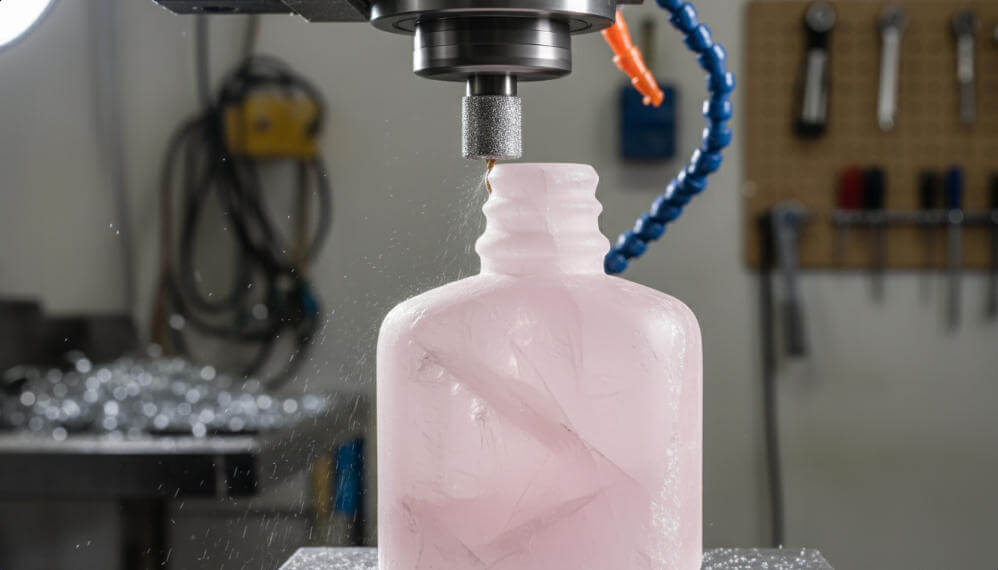
Precision CNC machining defines structural geometry, internal cavities, and neck finishes. Typical machining cycles range from 20 to 45 minutes depending on bottle complexity. Precision finishing and detailing may add an additional 30 to 60 minutes per unit.
After machining, skilled artisans perform manual polishing to achieve optical clarity. Hand polishing cycles can range from 40 to 90 minutes depending on geometry and engraving depth. This combination of advanced machinery and traditional craftsmanship produces the reflective surfaces expected in premium crystal packaging.
Surface inspection uses LED lighting and magnification to detect scratches larger than 50 μm. Bottles failing visual or roughness criteria return to re-polishing before moving to assembly.
Assembly and OEM Quality Testing
Assembly includes pump fitting, cap alignment, and decorative integration. Dimensional measurements confirm that neck tolerances meet sealing requirements. Functional tests ensure smooth pump operation and consistent spray alignment.
Mechanical durability testing follows protocols inspired by ISTA 3A transportation testing:
- Drop height: 80–100 cm
- Drop orientations: base, edge, corner
- Test cycles: 5–8 drops per bottle
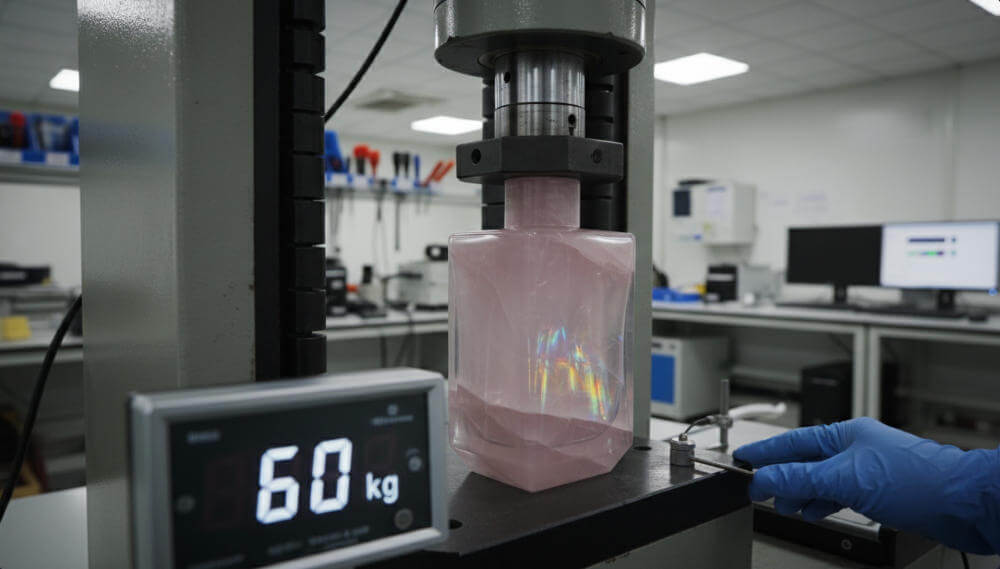
Compression testing simulates stacking loads of approximately 50-60 kg for 24 hours. Bottles must maintain structural integrity without cracking or leakage.
Thermal shock testing based on ASTM C149 concepts involves temperature cycling from 5°C to 45°C for 10–20 cycles. Coating adhesion is verified using cross-hatch methods aligned with ASTM D3359.
Tooling Development and Cost Structure in Perfume Bottle Custom Projects
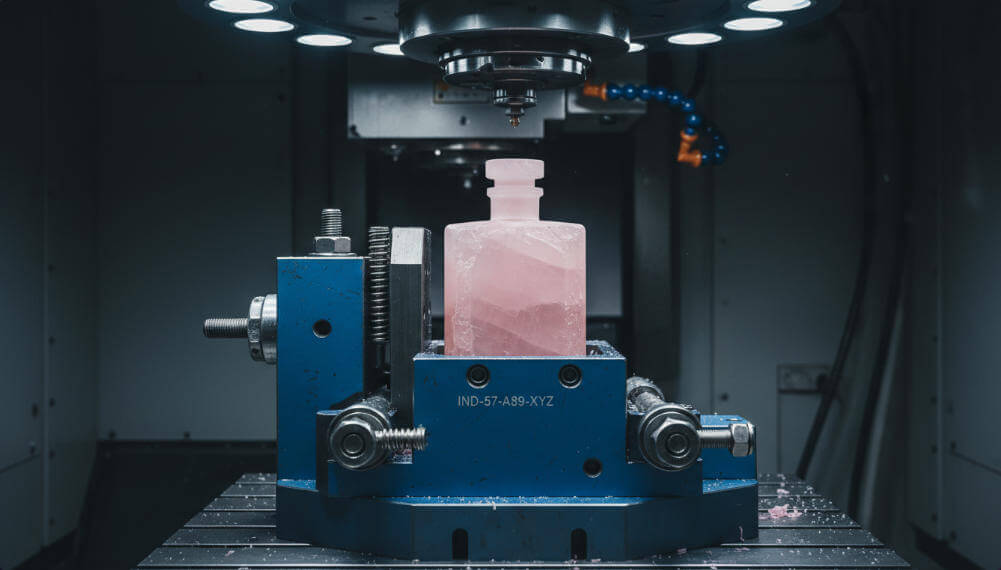
Tooling Systems and Manufacturing Fixtures
Crystal bottle production relies on specialized fixtures that stabilize materials during machining. Custom holding tools prevent vibration and ensure dimensional precision across batches. While tooling requires upfront investment, it dramatically improves production consistency and reduces long-term defect rates.
Tooling design considers future scalability. Even limited-edition bottles benefit from standardized fixtures that allow repeat production without redesign. Well-developed tooling enables consistent aesthetic reproduction across multiple fragrance launches.
Cost Drivers and Production Economics
Key cost factors include raw crystal quality, machining complexity, hand finishing time, and production volume. Manual engraving and decorative inlay significantly increase labor intensity. Small batch runs typically carry higher per-unit costs because setup and tooling investments are distributed across fewer units.
Typical OEM yield metrics illustrate the importance of efficient design:
- Rough machining yield: 75–85%
- Final polished yield: 65–75%
- Deep engraving projects: 55–65%
Understanding these ranges helps brands estimate realistic pricing and timeline expectations.
Design Optimization for Budget Control
Manufacturers often suggest subtle structural adjustments to reduce machining time without compromising aesthetics. For example, simplifying internal cavities or reducing extreme undercuts can decrease cycle time by up to 20%. Strategic focus on signature design areas—such as caps or front engravings—maintains luxury identity while controlling production costs.
Quality Standards and Compliance in Crystal Perfume Bottle OEM Manufacturing
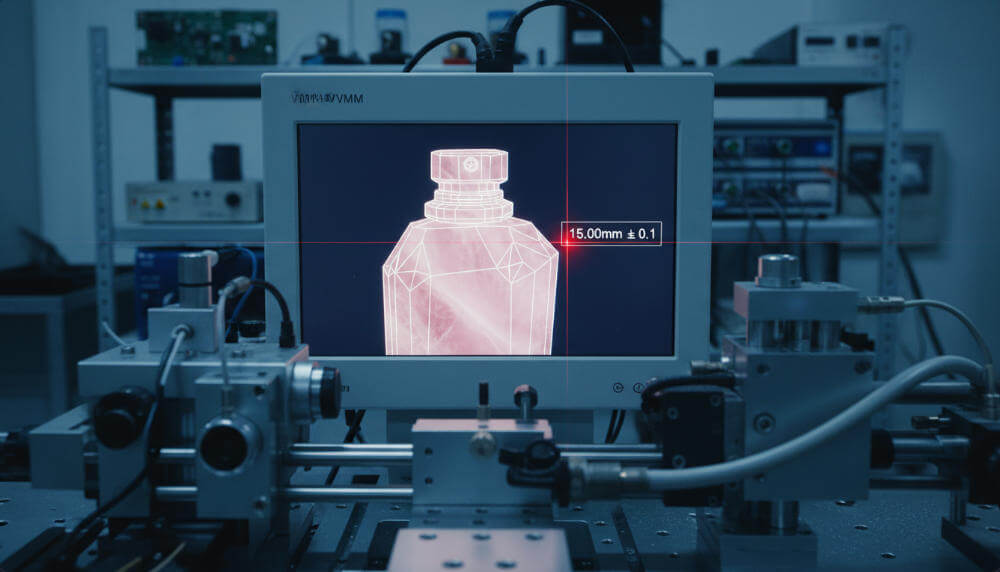
Dimensional Verification and Structural Safety
Digital measurement tools verify tolerances throughout production. Neck dimensions, wall thickness, and base flatness are measured at multiple checkpoints. Bottles failing dimensional criteria are rejected before finishing to avoid unnecessary labor costs.
Structural safety testing evaluates stress resistance and durability. Bottles must withstand simulated logistics conditions without fractures. Engineering data from testing cycles helps refine design parameters for future projects.
Optical Quality and Surface Inspection
Visual clarity remains a defining characteristic of crystal perfume bottles. Multi-angle lighting inspections identify polishing inconsistencies and inclusions. Surface roughness measurements ensure consistent tactile quality and premium visual appearance.
Optical inspection standards reinforce brand reputation by guaranteeing that every bottle meets luxury presentation expectations before shipment.
Regulatory and Material Safety Considerations
OEM manufacturers follow recognized engineering and packaging frameworks such as ISO management systems and ASTM material testing protocols. Chemical compatibility testing ensures that alcohol-based fragrances do not degrade coatings or adhesives over time.
In addition, labeling areas and regulatory markings are integrated during early design stages. Planning these elements in advance prevents conflicts with decorative features and ensures compliance with international distribution requirements.
Sustainability and Responsible Crystal Production in OEM Customization
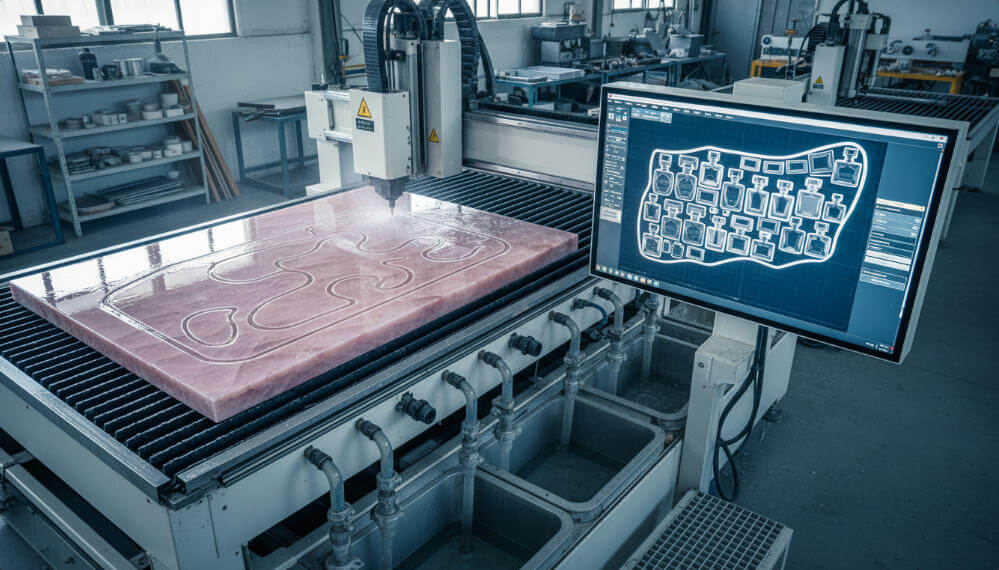
Efficient Material Utilization
Optimized cutting layouts maximize the number of components produced from each crystal slab. Offcuts are repurposed into smaller accessories or decorative elements whenever possible. Digital simulation tools reduce the number of physical prototypes required, conserving raw material resources.
Water Recycling and Dust Control Systems
Crystal machining uses water for cooling and polishing. Modern recycling systems allow reuse of a large portion of process water, reducing environmental impact. Dust extraction systems protect workers and maintain clean workshop conditions during cutting operations.
Responsible manufacturing practices align with environmental guidelines promoted by industry organizations such as the Natural Stone Institute.
Designing Refillable and Long-Life Bottles
Durability and refillability extend product lifespan and reduce waste. Engineering refill-friendly neck designs allows pumps to be replaced without damaging the bottle. Collectible crystal designs encourage long-term consumer use rather than single-use disposal.
Long-Term OEM Partnerships – Building Sustainable Manufacturer–Brand Collaboration
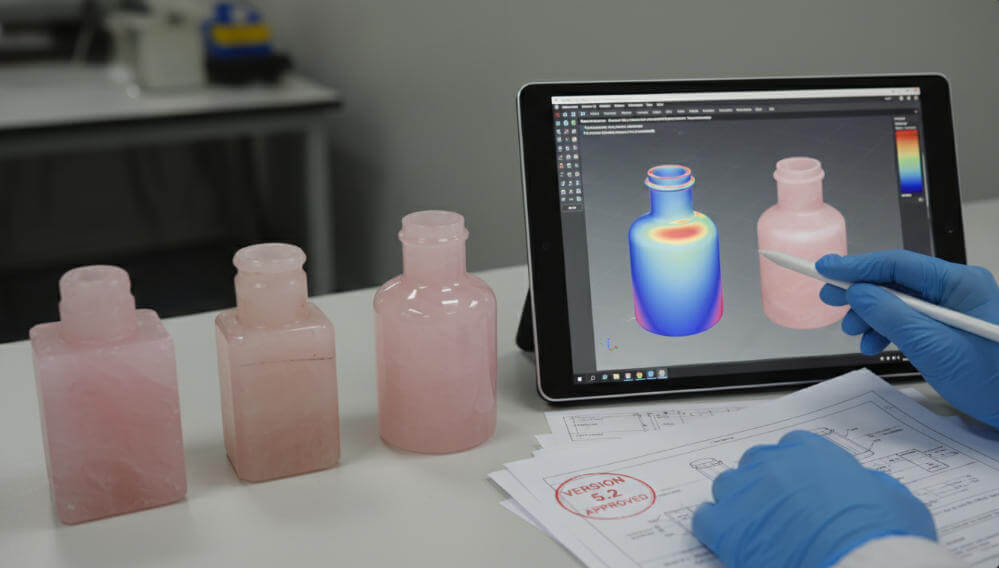
Transparent Communication and Engineering Collaboration
Continuous communication between brand and manufacturer ensures alignment throughout the customization process. Regular prototype reviews and production updates allow rapid design adjustments and faster approval cycles.
Digital collaboration tools enable remote design evaluation and virtual inspections, supporting efficient global partnerships.
Scaling Production from Limited Editions to Mass Distribution
Early scalability planning allows bottles to transition from artisan runs to larger production volumes. Standardized machining programs and consistent material sourcing support expansion without sacrificing quality.
Long-term partnerships improve efficiency because manufacturers gain familiarity with brand aesthetics and technical requirements over time.
Post-Production Support and Continuous Improvement
OEM collaboration continues after delivery through replacement parts, design refinement, and performance feedback analysis. Data from real-world usage helps improve ergonomics and durability in future releases.
Industry Recognition and Third-Party Validation in Crystal Perfume Bottle Custom Manufacturing
Alignment with International Packaging and Fragrance Industry Practices
In professional perfume bottle custom OEM production, alignment with recognized industry practices is an important indicator of credibility. Beyond internal engineering processes, Stone Elf’s manufacturing workflow follows structural packaging principles commonly referenced within global fragrance and cosmetic supply chains.
Industry groups such as the International Fragrance Association (IFRA) and the Cosmetic Packaging Group of the Society of Cosmetic Chemists (SCC) regularly emphasize the importance of material compatibility, packaging safety, and long-term durability in fragrance containers. While these organizations do not certify individual factories, their technical frameworks influence how OEM manufacturers structure testing and design validation.
For example, pump sealing tolerances and chemical resistance testing procedures used in our factory are aligned with general packaging safety principles promoted by international cosmetic supply networks. These frameworks help ensure that customized crystal bottles remain compatible with high-alcohol fragrance formulations used by global perfume brands.
Participation in Professional Manufacturing and Stone Processing Networks
In the natural crystal and stone processing industry, technical knowledge often develops through collaboration between manufacturers, material suppliers, and trade associations. Professional groups such as the Natural Stone Institute and World Packaging Organisation (WPO) provide shared guidance on sustainable production practices, finishing standards, and workplace safety improvements.
Stone Elf’s production methods reflect evolving industry practices, including water recycling, dust control systems, and material optimization strategies. These operational methods mirror sustainability recommendations promoted within professional stone manufacturing communities and packaging engineering networks.
Participation in trade exhibitions and supply-chain events also supports ongoing technical learning. Exposure to international packaging innovations allows manufacturers to refine tooling systems, finishing processes, and decorative techniques used in luxury crystal perfume bottles.
Third-Party Laboratory Testing and Independent Verification
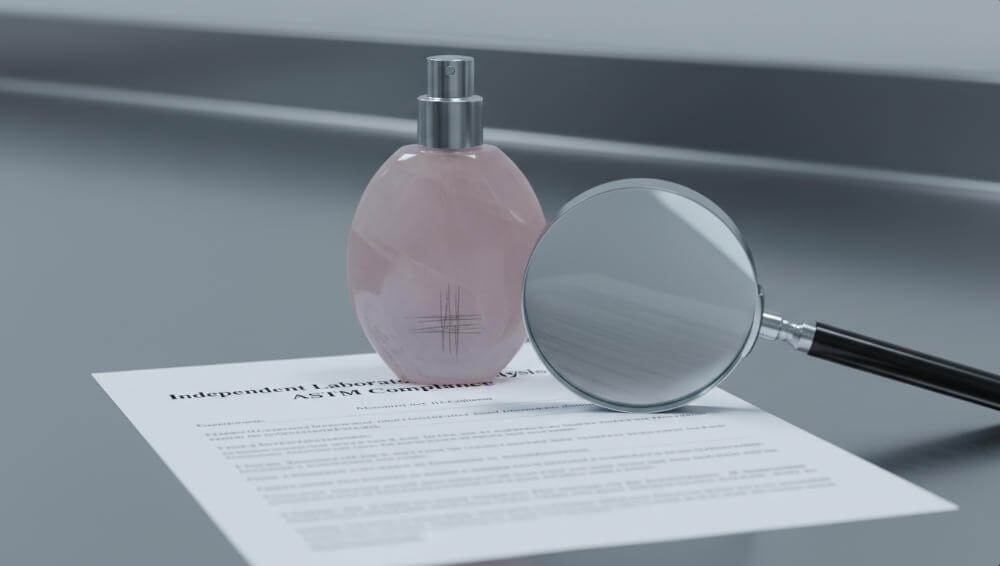
To strengthen credibility beyond internal inspection, many OEM crystal perfume bottle projects include independent third-party testing during development or mass production stages. External laboratories may conduct chemical compatibility testing, coating durability analysis, or mechanical performance validation using standardized protocols.
Independent evaluations commonly include:
- Coating adhesion verification using ASTM-based cross-hatch testing
- Environmental exposure testing for humidity and temperature resistance
- Transportation simulation based on ISTA testing frameworks
Third-party reports provide fragrance brands with documented performance data that can be shared with retailers, distributors, and regulatory bodies. This external validation enhances transparency and reduces reliance on manufacturer self-assessment alone.
Real OEM Project Case Studies – Manufacturer Experience in Perfume Bottle Custom
Case Study – Limited Edition Luxury Crystal Perfume Bottle
A European niche fragrance brand approached Stone Elf to develop a heavy-base crystal perfume bottle for a limited seasonal release. The design featured deep geometric engraving and a thick transparent base intended to enhance light refraction.
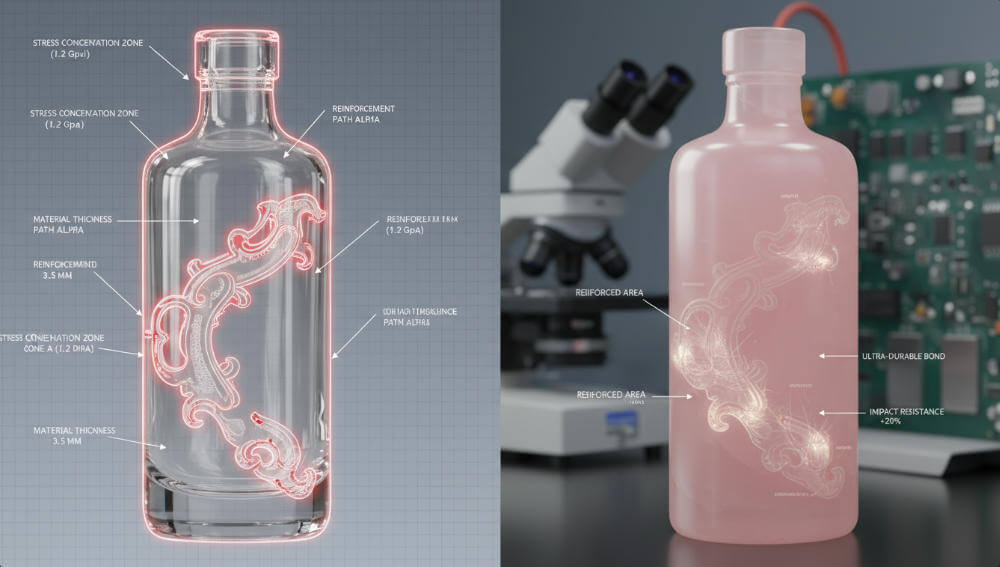
During early engineering review, stress concentration risks were identified at sharp engraving transitions. By increasing internal radii slightly and adjusting engraving depth, machining yield improved from an estimated 58% to approximately 70%. Drop testing simulations confirmed improved durability without altering the visual identity of the bottle.
The final product achieved consistent optical clarity and passed transportation testing cycles. The brand successfully launched the fragrance as a collectible limited edition, demonstrating how engineering collaboration can support artistic design goals.
Case Study – Scalable OEM Production for an Emerging Global Fragrance Brand
An emerging fragrance startup initially requested a small batch of handcrafted crystal bottles with artisanal engraving. After early market success, the brand expanded production volumes significantly. Scaling required redesigning machining fixtures and optimizing polishing workflows without compromising aesthetic consistency.
By standardizing CNC programs and introducing modular tooling, production capacity increased while maintaining identical neck tolerances and engraving quality. Yield rates improved from approximately 62% during early batches to over 72% in scaled production.
This case highlights how early OEM partnerships enable long-term scalability and consistent quality across multiple fragrance launches.
Case Study – Sustainable Refillable Crystal Bottle Development
A wellness-oriented fragrance brand sought a refillable crystal perfume bottle aligned with environmental values. Engineering efforts focused on designing a durable neck structure that allowed repeated pump removal without damaging sealing surfaces.
Testing included repeated assembly cycles exceeding 50 open-and-close operations. Structural reinforcement around the neck area reduced wear over time, while maintaining elegant external proportions.
The resulting design supported the brand’s refill program and demonstrated how sustainability goals can be integrated into perfume bottle custom projects through practical engineering solutions.
Media Exposure, Trade Shows, and Industry Visibility in OEM Crystal Bottle Manufacturing
Role of International Packaging Exhibitions
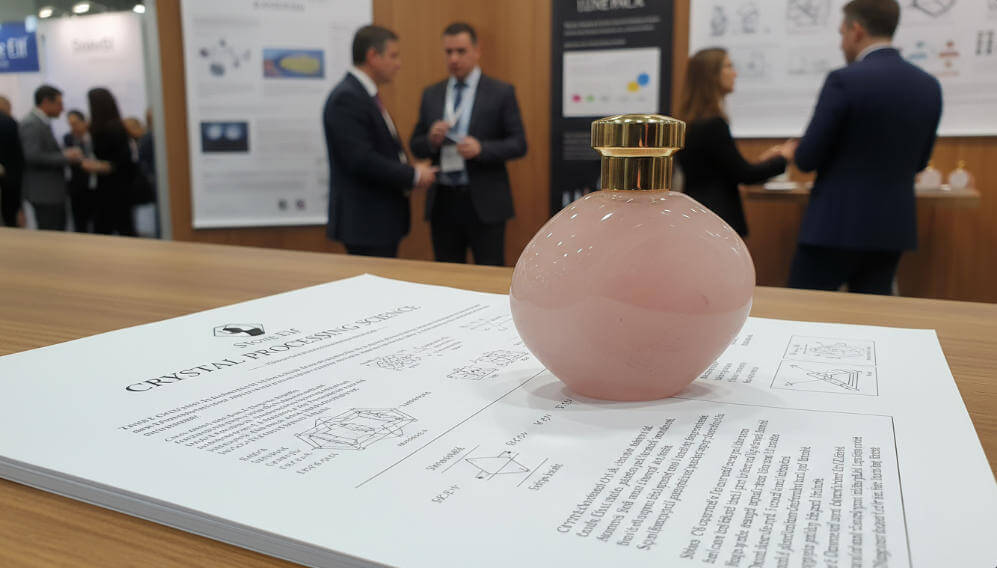
Global packaging and cosmetic supply exhibitions serve as important platforms for manufacturers to showcase technical capabilities and exchange knowledge. Events such as Cosmopack Bologna, Luxe Pack Monaco, and Packaging Innovations bring together fragrance brands, material engineers, and packaging designers.
Participation in such exhibitions allows manufacturers to demonstrate custom crystal bottle technologies, including advanced engraving techniques and hybrid stone–crystal component integration. Exposure to international audiences also encourages continuous innovation and adoption of emerging manufacturing practices.
Industry Publications and Professional Knowledge Sharing
Professional packaging publications and industry blogs frequently highlight evolving trends in luxury fragrance packaging, including refillable bottle design and premium material applications. By contributing technical insights or participating in interviews, manufacturers help educate the industry about realistic engineering challenges behind luxury packaging.
Sharing manufacturing perspectives in professional forums increases transparency and builds trust between brands and OEM partners. When manufacturers openly discuss production processes and material limitations, brands gain a clearer understanding of how to design products that are both innovative and manufacturable.
Building Authority Through Transparent Manufacturing Communication
Modern fragrance brands value transparency and authenticity from their OEM partners. Detailed documentation of production processes, engineering parameters, and sustainability initiatives provides brands with credible storytelling material for marketing and consumer education.
By combining technical whitepaper-style documentation with real production case studies, manufacturers move beyond self-promotional claims toward verifiable professional authority. Transparent communication strengthens long-term partnerships and enhances the reputation of both manufacturer and brand.
Conclusion – The True Engineering Value Behind Perfume Bottle Custom OEM Manufacturing
Perfume bottle custom OEM manufacturing combines artistic creativity with precise engineering discipline. From quantified tolerances and verified testing protocols to sustainability strategies and long-term collaboration, successful crystal perfume bottle projects require deep technical expertise.
At Stone Elf, our experience shows that early engineering involvement, measurable production parameters, and transparent communication create the strongest results. Crystal perfume bottles are not simply containers; they are engineered luxury objects that represent brand identity, craftsmanship, and reliability.
By integrating design creativity with real manufacturing science, fragrance brands can achieve bottles that are visually distinctive, structurally durable, and ready for global distribution. Through professional OEM customization, the perfume bottle becomes a lasting symbol of both fragrance artistry and precision manufacturing excellence.
